Everybody is batting .125.
That's my analysis of the 2026 MLB season so far. Good hitters and bad hitters. Big names and up-and-comers. I'm telling you, anytime I click a player's name or notice their stats during a game, I see a .125 batting average.
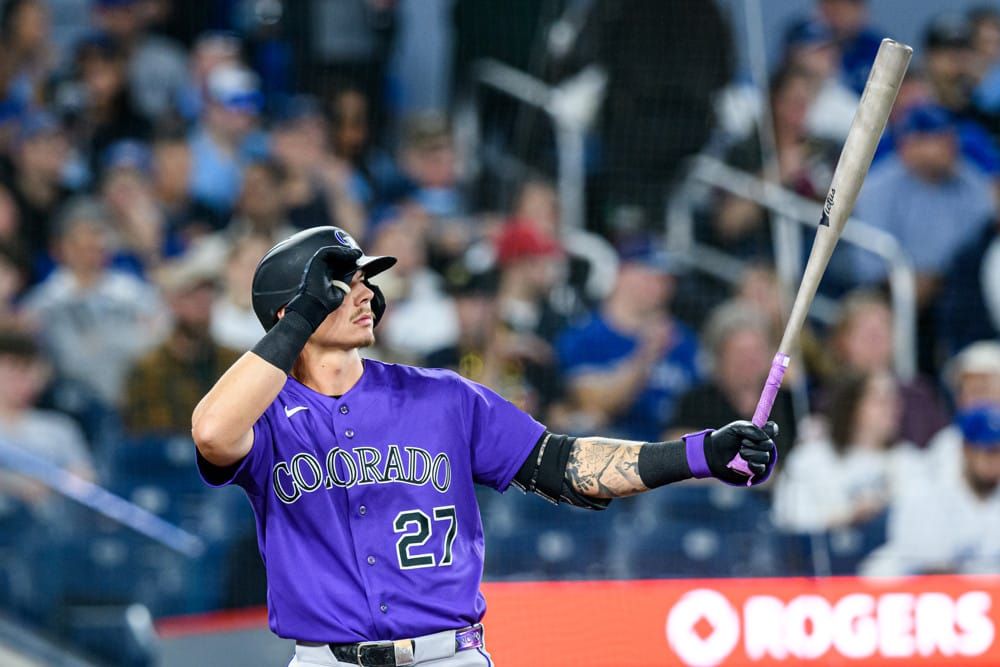
Jordan Beck, pictured above, is an outfielder for the Colorado Rockies. He actually might not mind joining the esteemed company of those with .125 batting averages. He is currently batting .103.
Here's a sampling of hitters whose statistics I have noticed and was sure that I saw a .125 batting average:
- Fernando Tatis, Jr., who is now up to a .228 average
- José Ramírez, who is batting .175
- Kyle Schwarber, who is batting .188
- Aaron Judge, who is batting .218
OK, so it was obviously an exaggeration based on a couple cherry-picked times I noticed. Or maybe I'm just used to seeing .125 (ish) batting averages because I cheer for the Colorado Rockies. But I get the sense that a lot of hitters are off to a slow start this season.
To which I say: we all get it, guys. We're right there with you.
In today's newsletter
- The Rockies are the same, but maybe different, but also the same
- ABS and catcher framing
- The Masters and getting older, along with some other odds and ends
Is this team actually different?
The Colorado Rockies opened their season by losing three games on the road against the Miami Marlins. They scored a measly seven total runs in those losses, settling right into the low expectations they have set for themselves as a franchise when it comes to away games.
After that opening series sweep, the Rockies were staring down a nine-game stretch against the Toronto Blue Jays, Philadelphia Phillies, and Houston Astros. I honestly didn't know if they would win a single game in their first four series of 2026.
It felt like this was the same old Rockies.
Then a funny thing happened up in Canada against the defending American League champions. The Rockies won that road series, continuing to pitch well and scoring runs in spurts. They lost their first home series against the Phillies but acquitted themselves nicely.
And by acquitting themselves nicely, I mean that they actually looked like a big league club.
Then another funny thing happened. The Rockies swept the Astros. They didn't just sweep the Astros. They stomped the Astros.
At this point in the young season, you could talk yourself into both versions of events: that these are the same bad Rockies, or that this group is different. Even if they aren't playoff contenders or talented enough to avoid the basement of the NL West, maybe there's something to at least hope things are getting better.
That was the background as the Rockies headed to San Diego for a four-game series against the Padres. As I'm sure is the case with my fellow Rockies fans, there is a specific kind of loss that I associate with those west coast road trips and those games in Los Angeles, San Francisco, and San Diego.
Would the Rockies go lose the same agonizing games that we've seen so many times before? The games where it's one helpless pop-up after another, where a one-run deficit feels like 10 runs, where the Rockies sometimes keep the score close but always stay cold on offense until the opponent breaks through.
Or would these Rockies give us another sign that this team might be different? Might they provide another surprise to go along with their 14-run game in Toronto and their sweep of the Astros?
Before I tell you what happened, I'm going to tell you about the first few innings of the series. As usual, the Rockies weren't able to get much going on offense. But it wasn't the usual when it came to the at-bats, at least not to my eyes. The hitters were tough outs, fouling pitches off and coming up with some hard contact.
At that point, they hadn't drummed up any offense yet, but I found myself hopeful that they actually might before the game and series was over. I thought they might even pick up a couple wins.
They did not. The Rockies were swept by the Padres. The sweep started with a heart-breaking, walk-off grand slam. It ended with a dreary, 7-2 drubbing. It all started to feel like the same old Rockies.
The Rockies are 6-10. They are, alas, tied for the worst record in baseball. They play the Astros again on Tuesday, this time on the road. With this Padres series as the freshest memory, it sure feels like a setup for more of the same old Rockies.
Even so, I'm still hoping it might be something different.
The ABS system and pitch framing
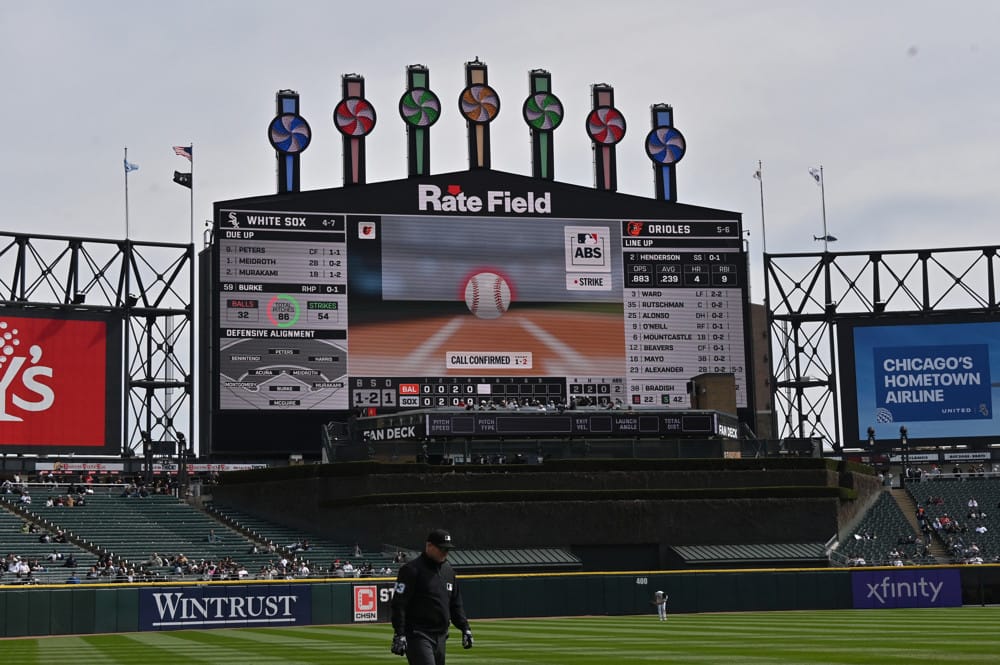
MLB's ball-strike challenge system is live. I wasn't sure what to expect. But I think I like it.
I was an enthusiastic and then reluctant catcher in my baseball playing days. I was a good receiver behind the plate. I was great at blocking pitches and at "framing" them, or catching borderline pitches to make them look like strikes.
I was not good at throwing down to second. That turned into such a thing that my enthusiasm for the whole enterprise waned. But it was so fun to successfully frame a pitch, or at least to catch the ball in a way that the umpire called strikes for my pitcher. I remember that part of my playing days fondly.
We may or may not be headed in the direction of robot umpires, which would render pitch framing obsolete. But we aren't there yet, and I think the new system is a fun middle ground.
Each team has two challenges that can be used by hitters or defenders (almost always the catcher). If the challenges are successful, the team keeps them and can continue challenging. If the team has two unsuccessful challenges, then they are out of luck for the rest of the game.
This ABS challenge system has introduced some new strategy. Should teams only trust certain players with total freedom to challenge? Should they hold their challenges and only use them in certain counts or certain situations? Should they just save them for the late innings altogether?
This is the part where I like the continued relevance of framing. If a team burns both of their challenges, then the opposing catcher can make them pay with effective framing for the rest of the game. Or maybe teams would employ a conservative approach to challenges, knowing that the opposing catcher is good at framing and not wanting to be in that position in a late-and-close moment.
I want to keep framing as part of baseball and as a skill for catchers. This seems like a pretty good way to do it, along with some other interesting wrinkles.
Odds and ends
⛳Rory McIlroy is both impossible to relate to and arguably the most relatable golfer. He hits out-of-this-world shots that require best-in-the-world talent, fitting for a back-to-back Masters champion. And yet he does so while creating so much darn stress for himself.
⚾My family likes to play the "first place game," where we guess who's at the top of the standings in each MLB division. Can you name the first place team in the NL Central? I bet you can't, because it's the Pittsburgh Pirates.
🏇Nikola Jokić averaged a triple-double per game again, and he's probably not going to win the MVP again. He probably doesn't care, so I know I shouldn't either. But I find it so annoying, and I'm sure other Nuggets fans do as well.
📄I have slowly been making my way through The Paper. I have enjoyed most of it, especially grading on the curve for the first season of a comedy show. For my money, it hit a different gear with its eighth episode ("Church and State"). That episode is really funny.
📹 The final putt of a golf tournament won't often make for a good video send-off. But this one does. Way to go, Rory.
None of us will reach those heights this week; at least I don't think so, although I don't know what you have coming up. But whatever it is, I hope you have a great week.